
Tennessee Smoke Free Association (TSFA)
November 10th, 2025
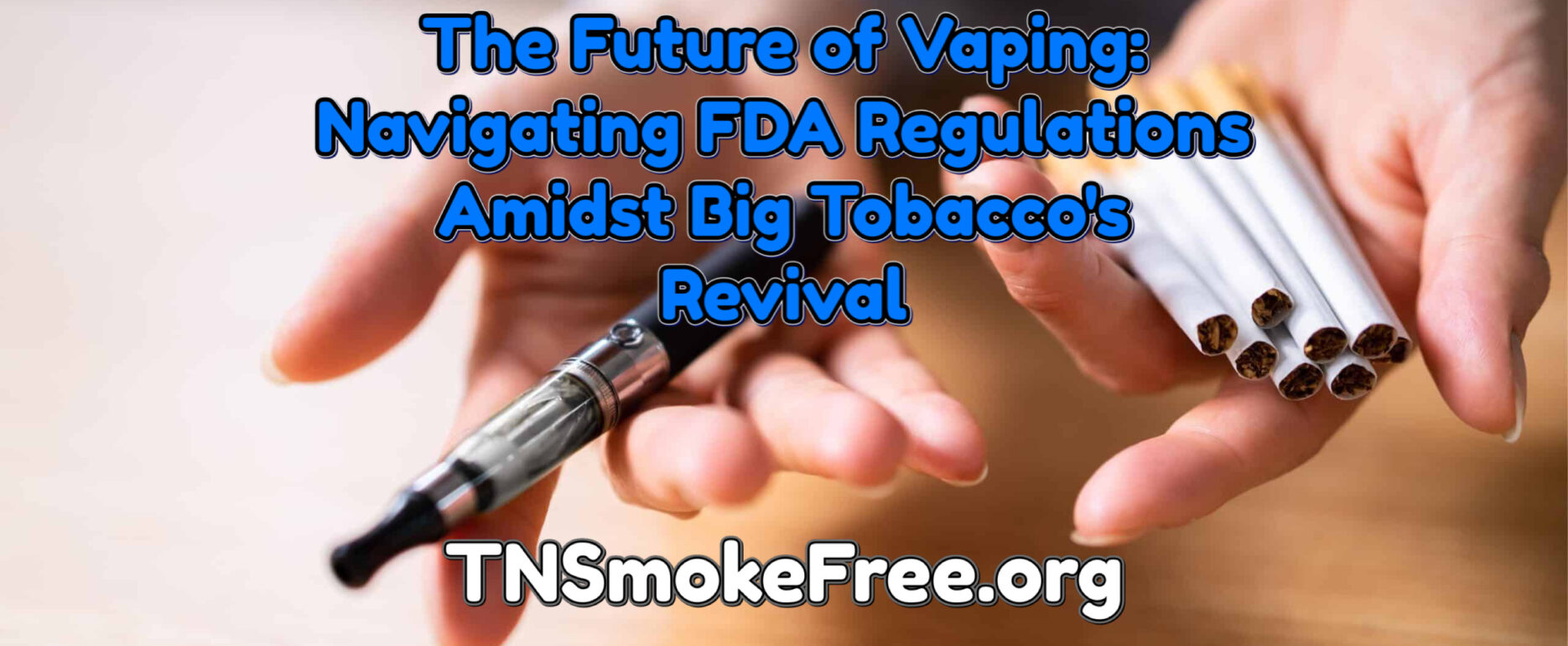
The Future of Vaping: Navigating FDA Regulations Amidst Big Tobacco’s Revival
Forecasting the potential effects of FDA policies on the future of vaping and the expansion of big tobacco brands.
As the vaping industry continues to evolve, regulatory policies from the U.S. Food and Drug Administration (FDA) profoundly influence its trajectory. With increasing scrutiny surrounding nicotine products and the resurgence of major tobacco companies in the vaping space, the future of vaping raises critical questions. This article explores the potential effects of FDA regulations on vaping’s future and how they intersect with the expansion of big tobacco brands.
The Current Landscape of Vaping and Regulation
Vaping emerged in the early 2000s as a disruptive force in the tobacco market, offering smokers a potentially less harmful alternative to traditional cigarettes. The appealing range of flavors and diverse product designs drew adult smokers looking to quit or cut back on their tobacco usage. However, as vaping gained traction, concerns about youth access and use surged, prompting the FDA to regulate the industry more rigorously (Cullen et al., 2019).
Implemented regulations, particularly the Pre-Market Tobacco Product Application (PMTA) process, require manufacturers to provide extensive data on the safety and efficacy of their products before they can be marketed. While this is intended to ensure consumer safety, the PMTA process has created significant barriers to entry, particularly for smaller companies (National Academies of Sciences, Engineering, and Medicine, 2018).
The Revival of Big Tobacco’s Influence
Amidst these regulatory changes, big tobacco companies have experienced a revival by strategically repositioning themselves within the vaping market. Faced with declining cigarette sales, major tobacco firms such as Altria and British American Tobacco have made significant investments in e-cigarette brands and related technologies (Zeller & Holmes, 2020). These companies leverage their established market presence and resources to navigate the FDA’s regulations, often acquiring smaller vaping brands or launching their products.
The revival of big tobacco raises questions about the future of a once-innovative vaping market. With their influence and financial resources, big tobacco companies can shape the competitive landscape and potentially marginalize smaller players who have contributed to the industry’s growth and innovation (Higgins et al., 2020).
Navigating FDA Regulations: Opportunities and Threats
As the FDA continues to develop its regulatory framework, the intersection of regulations, big tobacco expansion, and the vaping market presents both challenges and opportunities for the future of vaping.
Regulatory Barriers for Small Businesses
For smaller vaping companies, the stringent PMTA requirements and ongoing regulatory uncertainty pose significant obstacles. Many of these companies lack the financial resources to comply with the comprehensive data requirements set forth by the FDA. This creates a challenging environment where innovation is stifled, and diversity in product offerings diminishes (Fischer et al., 2019). As larger tobacco companies consolidate their position through acquisitions and market dominance, smaller firms may struggle to survive, leading to reduced competition and fewer options for consumers.
The Role of Youth Regulation
The FDA’s focus on youth vaping has led to restrictions on flavored products and marketing practices that could appeal to younger consumers. While protecting youth from nicotine addiction is critical, such measures may inadvertently reinforce traditional tobacco use among adults, pushing current vapers back toward conventional cigarettes once appealing flavors are no longer available (Schneider et al., 2021).
In the long run, if the FDA continues to emphasize punitive measures against independent vaping brands while favoring established tobacco companies, the unified effort to mitigate smoking-related harm may falter. The perception of vaping as an alternative to smoking should not be undermined by narrow regulatory agendas that do not consider the broader implications for public health.
Potential for Innovation and Market Growth
Despite these challenges, opportunities for growth within the vaping industry still exist. Both regulatory bodies and consumer preferences are gradually shifting towards more nuanced recognition of vaping’s role in smoking cessation.
An increase in public awareness of the relative risks associated with vaping compared to smoking may drive adult smokers toward safer alternatives. If the FDA adopts a more balanced regulatory approach, focusing on harm reduction rather than punitive measures, it could foster a conducive environment for innovation and new product development (Brennan et al., 2020).
Moreover, as technology advances, new vaping devices and delivery methods may emerge, prompting renewed interest in the category. If these innovations effectively meet consumer needs and preferences, they could help revitalize the industry and promote the transition away from traditional tobacco use.
The Future Outlook: A Path Forward
Navigating the future of vaping within the context of FDA regulations and big tobacco’s revival requires a thoughtful examination of policies and their implications. The following considerations may help shape a viable path forward:
1. Encouraging a Balanced Regulatory Approach: The FDA should emphasize regulations that protect youth while also enabling access and innovation in the vaping market for adult smokers. Implementing differentiated regulations that address youth access without disproportionately affecting adult consumers will be essential (Katz et al., 2020).
2. Promoting Transparency and Consumer Education: Educating the public about the relative risks associated with vaping compared to smoking can foster informed consumer decisions. Transparent messaging regarding the benefits of vaping as a harm reduction tool can empower adult smokers to make choices conducive to better health (Moore et al., 2021).
3. Fostering Competition: Policymakers should be vigilant against potential monopolistic trends as big tobacco companies expand their influence. Emphasizing support for smaller vaping businesses and promoting competition can enhance product diversity and innovation in the market (Zeller & Holmes, 2020).
4. Monitoring Regulatory Developments: Keeping a close eye on FDA policy changes will be critical for industry stakeholders. Engaging in advocacy efforts to ensure that regulations promote public health without stifling competition will be important as the market landscape evolves.
Conclusion
The future of vaping hangs in balance as it faces the dual challenges of stringent FDA regulations and the revival of big tobacco. While these developments present formidable obstacles to smaller manufacturers and innovation, opportunities for growth and harmonization between public health goals and vaping as a harm reduction tool also exist.
By taking a proactive stance on regulation, embracing transparency, and encouraging competition, stakeholders can navigate the complexities of this landscape. The potential for vaping to serve as a valuable alternative to traditional smoking remains strong, provided a supportive framework allows for continued innovation and access to safer products. Ultimately, the objective must be to create a healthier future for all by prioritizing informed choices, consumer safety, and comprehensive strategies aimed at reducing the harm associated with smoking.
References
1. Alpert, J. M., & Pavia, L. (2019). “The Impact of Regulation on the Tobacco Industry.” Tobacco Control.
2. Brennan, G., et al. (2020). “The Role of E-Cigarettes in Smoking Cessation: A Review.” International Journal of Environmental Research and Public Health.
3. D’Imperio, J. (2020). “Vaping as a Harm Reduction Tool: Insights from Public Health.” Nicotine & Tobacco Research.
4. Farsalinos, K. E., et al. (2015). “Chemical Composition of Electronic Cigarette Liquids: A Systematic Review.” Tobacco Control.
5. Fischer, B., et al. (2019). “Regulatory Considerations for Vaping Products.” Tobacco Control.
6. Higgins, S. T., et al. (2019). “E-Cigarettes for Smoking Cessation: An Updated Review.” Tobacco Control.
7. Katz, J., et al. (2020). “Engaging Consumers in the Regulatory Process: Lessons from Vaping.” Tobacco Regulatory Science.
8. Klein, E. G., et al. (2021). “Tobacco Marketing and Its Impact on Youth Vaping.” Environmental Research and Public Health.
9. Miech, R. A., et al. (2019). “Trends in Adolescent Vaping and Cigarette Smoking.” American Journal of Public Health.
10. Moore, G. F., et al. (2021). “Public Health Campaigns on Vaping: Opportunities and Challenges.” Tobacco Control.
11. National Academies of Sciences, Engineering, and Medicine. (2018). “Public Health Consequences of E-Cigarettes.” The National Academies Press.
12. Schneider, H. G., et al. (2021). “Youth Vaping: Public Health Perspectives.” Tobacco Control.
13. Sinha, D. N., et al. (2021). “Addressing Youth Vaping: Public Health Implications.” Journal of Global Health.
14. Zeller, M. & Holmes, D. (2020). “Navigating the Regulatory Landscape of Vaping in the United States.” Tobacco Regulatory Science.
Download Article: The Future of Vaping – Navigating FDA Regulations Amidst Big Tobacco’s Revival 11.10.2025
The Tennessee Smoke Free Association (TSFA) is an advocacy group and trade organization with a focus on Tobacco Harm Reduction (THR) through the use of personal vaporizers (electronic cigarettes) and other smokeless tobacco products shown to reduce the morbidity and mortality associated with smoking. The TSFA was formed in 2014 to provide support and education regarding alternative methods of Tobacco Harm Reduction. We focus on the prevention of tobacco harm and seek to cooperate with the Tennessee Health Agencies to function for the greater health of the Tennessee public as well as monitor the legislation for or against our movement of tobacco harm reduction. You can learn more by visiting TNSmokeFree.org.