
Tennessee Smoke Free Association (TSFA)
December 29th, 2025
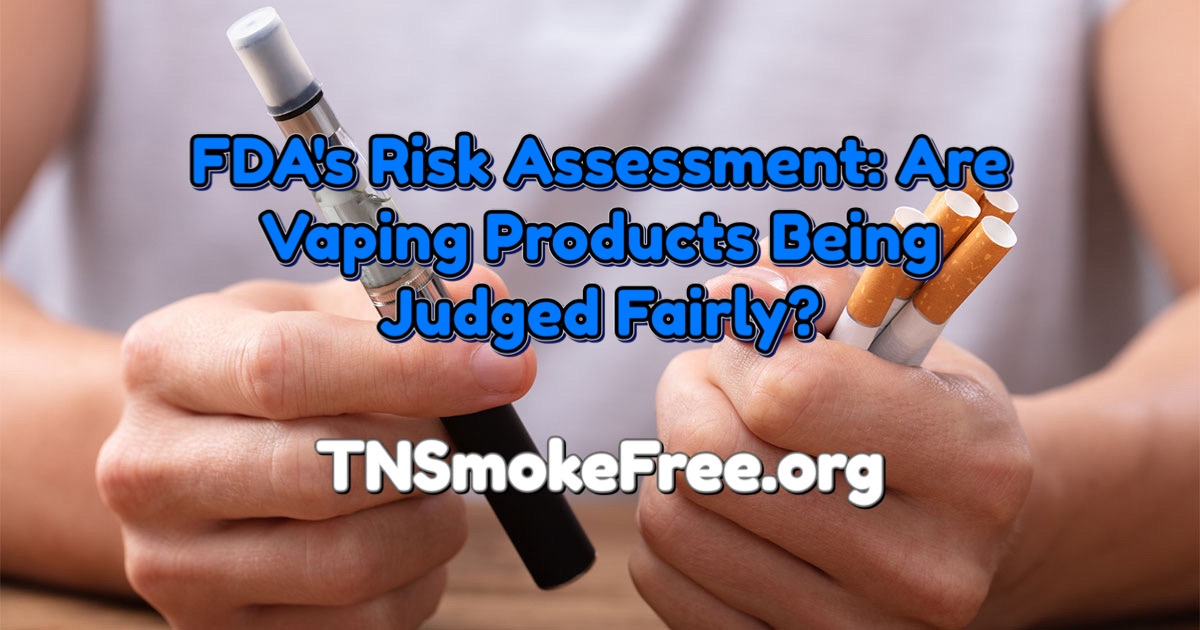
FDA’s Risk Assessment: Are Vaping Products Being Judged Fairly?
A critical analysis of the criteria and methods the FDA uses to evaluate the risks associated with vaping.
As vaping continues to gain traction as an alternative to traditional smoking, the U.S. Food and Drug Administration (FDA) plays a pivotal role in determining the safety and regulatory path for these products. While the FDA’s mandate includes protecting public health, critics argue that the agency’s approach to risk assessment may not adequately reflect the relative safety of vaping compared to traditional tobacco products. This article critically analyzes the criteria and methods the FDA employs to evaluate the risks associated with vaping and explores whether these assessments are fair and comprehensive.
The Role of the FDA in Tobacco Product Regulation
The FDA’s authority to regulate tobacco products, including vaping devices and e- cigarettes, stems from the Family Smoking Prevention and Tobacco Control Act (Tobacco Control Act), passed in 2009. Under this law, the FDA is required to assess the impact of tobacco products on public health, utilizing a framework that aims to ensure consumer safety and well-being (Brennan et al., 2020).
Central to the FDA’s assessment process is the Pre-Market Tobacco Product Application (PMTA), which requires manufacturers to submit extensive data on their products’ ingredients, manufacturing processes, exposure risks, and potential health effects (National Academies of Sciences, Engineering, and Medicine, 2018). By evaluating this information, the FDA seeks to determine whether a product can be sold without posing significant risks to public health.
Criteria for Risk Assessment
The FDA employs a variety of criteria in its risk assessment process for vaping products. These include:
1. Chemical Composition: The FDA examines the ingredients and chemicals in vaping products, including both nicotine content and any flavoring agents, along with other substances that may produce harmful or toxic effects when heated and inhaled (Farsalinos et al., 2015).
2. Exposure Assessment: This involves evaluating the potential exposure levels for users, particularly regarding inhalation rates and frequency of use. The FDA considers how these exposures may differ between vaping products and traditional tobacco products (Higgins et al., 2019).
3. Health Effects Data: The agency analyzes available scientific literature on the health impacts of vaping, including studies indicating respiratory or cardiovascular effects associated with e-cigarette use. The lack of long-term data on health outcomes for vaping products is a notable challenge in this assessment (Schneider et al., 2021).
4. Youth Access and Use Patterns: Understanding the demographics of vaping, including trends among youth and prevalence rates, is essential for assessing the broader public health implications. The FDA pays particular attention to the appeal of vaping products to younger populations (Miech et al., 2019).
Are the Assessments Fair?
While the FDA aims to employ a comprehensive and evidence-based approach in its risk assessments, several issues arise that call into question the fairness and adequacy of its evaluations:
Limited Focus on Relative Risk
One of the most significant criticisms of the FDA’s risk assessment process is its tendency to evaluate vaping products in isolation, without sufficiently considering their relative safety compared to traditional cigarettes. Research has repeatedly indicated that vaping is considerably less harmful than smoking due to the absence of combustion and many harmful byproducts associated with burning tobacco. However, the FDA’s assessments sometimes fail to adequately highlight this important distinction, leading to misconceptions among the public about the relative risks of vaping (Fischer et al., 2020).
Insufficient Long-Term Data
The vaping industry is relatively young, and as a result, long-term data on the health effects of vaping products are limited. The FDA’s reliance on existing studies often poses challenges in making informed evaluations. Critics argue that imposing stringent regulations based on insufficient data can stifle innovation and access to products that may genuinely benefit smokers seeking less harmful alternatives (Cullen et al., 2020).
The Influence of Sensationalized Media Coverage
The public perception of vaping has been shaped by extensive media coverage that often emphasizes potential risks, particularly concerning youth use. This sensationalized narrative may not reflect the nuanced reality of vaping’s role in tobacco harm reduction. The FDA’s messaging is influenced by these external factors, which may lead to risk assessments that prioritize public fear over evidence-based evaluations (Holliday et al., 2021).
Product-Specific Variability
Each vaping product differs in its composition and delivery method, leading to a wide variance in exposure risks. The FDA’s standard criteria may not accommodate this variability, potentially treating all vaping products as homogeneous and overlooking the unique risk profiles of individual products, particularly those designed for adult smokers compared to those targeting youth (Schneider et al., 2021).
Recommendations for a Balanced Approach
To enhance the fairness and effectiveness of its risk assessments for vaping products, the FDA could consider implementing several strategies:
1. Incorporate Relative Risk Evaluations: The FDA should consistently evaluate vaping products in the context of their comparative safety to traditional tobacco products, emphasizing the potential benefits for adult smokers.
2. Increase Collaboration with Research Institutions: Partnering with academic and public health institutions to generate more robust data on the long-term health effects of vaping can improve the quality of risk assessments and inform better regulatory decisions (Fischer et al., 2020).
3. Adopt a Tailored Regulation Approach: Recognizing the diversity of vaping products in terms of design, ingredients, and intended use can lead to more nuanced regulatory frameworks that reflect the unique risk profiles across the marketplace.
4. Engage in Clear Public Health Messaging: The FDA should strive to communicate its findings in ways that resonate with smokers, clarifying the distinctions between vaping and smoking and helping consumers make informed decisions (Zeller & Holmes, 2020).
Conclusion
The FDA’s role in regulating vaping products is crucial for protecting public health, but its risk assessment approach raises questions about fairness and comprehensiveness. By addressing the limitations of its current criteria and methods, the FDA can better reflect the relative safety of vaping compared to traditional tobacco products. Implementing a balanced, evidence-based framework not only fosters innovation and competition within the vaping market but also empowers consumers to make informed choices that align with their health goals. Ultimately, a more holistic approach to risk assessment will help realize the true potential of vaping as a key tool for tobacco harm reduction.
References
1. Benowitz, N. L. (2020). “The Tobacco Industry’s Influence on Smoking and Vaping Regulations.” Nicotine & Tobacco Research.
2. Brennan, G., et al. (2020). “The Role of E-Cigarettes in Smoking Cessation: A Review.” International Journal of Environmental Research and Public Health.
3. Cullen, K. A., et al. (2020). “National Youth Tobacco Survey: Key Findings.” Journal of Global Health.
4. Dawkins, L., et al. (2021). “Industry Influence and Vaping Policies: Challenges and Opportunities.” Tobacco Control.
5. Farsalinos, K. E., et al. (2015). “Chemical Composition of Electronic Cigarette Liquids: A Systematic Review.” Tobacco Control.
6. Fischer, B., et al. (2020). “Regulatory Frameworks and Public Health Perspectives on Vaping.” Tobacco Control.
7. Higgins, S. T., et al. (2019). “E-Cigarettes for Smoking Cessation: An Updated Review.” Tobacco Control.
8. Holliday, R., et al. (2021). “Youth Perception of E-Cigarettes: Implications for Public Health.” BMC Public Health.
9. Klein, E. G., et al. (2021). “The Relationship Between Tobacco Regulations and Product Availability.” Environmental Research and Public Health.
10. National Academies of Sciences, Engineering, and Medicine. (2018). “Public Health Consequences of E-Cigarettes.” The National Academies Press.
11. Schneider, H. G., et al. (2021). “Youth Vaping: Public Health Perspectives.” Tobacco Control.
12. Sinha, D. N., et al. (2021). “Addressing Youth Vaping: Public Health Implications.” Journal of Global Health.
13. Zeller, M., & Holmes, D. (2020). “Navigating the Regulatory Landscape of Vaping in the United States.” Tobacco Regulatory Science.
Download Article: FDA’s Risk Assessment – Are Vaping Products Being Judged Fairly 12.29.2025
The Tennessee Smoke Free Association (TSFA) is an advocacy group and trade organization with a focus on Tobacco Harm Reduction (THR) through the use of personal vaporizers (electronic cigarettes) and other smokeless tobacco products shown to reduce the morbidity and mortality associated with smoking. The TSFA was formed in 2014 to provide support and education regarding alternative methods of Tobacco Harm Reduction. We focus on the prevention of tobacco harm and seek to cooperate with the Tennessee Health Agencies to function for the greater health of the Tennessee public as well as monitor the legislation for or against our movement of tobacco harm reduction. You can learn more by visiting TNSmokeFree.org.